Take the next step
Be part of the future of health research
Whether you're a researcher or participant, Alethios makes health research frictionless and comprehensive.

See how Alethios makes it simple to integrate validated digital cognitive batteries and self-report tools into decentralized clinical trials, supplement research, and longevity studies.
This is the final post in our three-part series on cognitive health. Part one made the case for why cognitive health matters as both a research and clinical endpoint. Part two walked through how it's actually measured, from site-based tools like MRI and administered batteries to decentralized platforms, surveys, and EEG devices. This post shows exactly how to put that measurement to work inside your own study.
As explored in parts one and two of Alethios' Cognitive Health blog series, cognitive health is a vital part of human health that's rarely studied outside of Alzheimer's or cognitive disorder research—despite affecting everyone. Alethios supports several validated ways to incorporate cognitive measurements into your study—from standardized questionnaires to objective digital testing to remote EEG (electroencephalogram)—each addable with the ease of clicking a button.
Alethios' library includes validated, standardized instruments for capturing how someone perceives their own cognitive state—a measure that matters both as a standalone endpoint and as a check against objective test results. There are many questionnaires available for measuring cognitive health. Two worth mentioned are the Everyday Cognitive Scale and the PROMIS Cognitive Function scale.
The Everyday Cognition scale (ECog) covers six everyday functional domains—memory, language, visuospatial function, planning, organization, and divided attention—in both self-report and informant/study-partner-report formats. It holds up well under scrutiny: the original 39-item version has shown good test-retest reliability and the ability to predict progression to cognitive impairment, and a validated 12-item short form (ECog-12) preserves those properties in a fraction of the time (ECog-12 validation, JPAD; original ECog validation, PubMed). Your study may require a license to use this assessment.
PROMIS Cognitive Function, developed and validated by the NIH, takes a related but distinct approach: it separates cognitive abilities (what someone can do) from cognitive concerns (problems they notice), and its item-banking format was built for exactly this kind of electronic, remote administration. It's demonstrated meaningful associations with clinical cognitive impairment, daily functioning, depression, and anxiety, and it's already in active use screening for cognitive decline in Medicare Annual Wellness Visits (PROMIS Cognitive Screener, PMC).
Self-report is only half the picture. Alethios studies can also layer in digital cognitive testing, where participants complete standardized tasks that measure actual performance in memory, attention, processing speed, and executive function, rather than perception of it. Administered digitally and remotely, these batteries give researchers a quantifiable signal to pair with, or check against, what participants report about themselves.
One of the digital batteries built into Alethios studies is BrainHQ, from Posit Science. BrainHQ organizes more than two dozen exercises into six cognitive categories—Attention, Brain Speed, Memory, People Skills, Intelligence, and Navigation—each built around a specific cognitive skill and backed by a growing body of peer-reviewed research, including studies on the real-world feasibility of deploying digital cognitive toolboxes remotely and unsupervised (BrainHQ validation research).
Because BrainHQ is designed to run unsupervised on a participant's own device, BrainHQ folds into an Alethios study the same way any other at-home measure does: no site visit, no proctor, just a link.
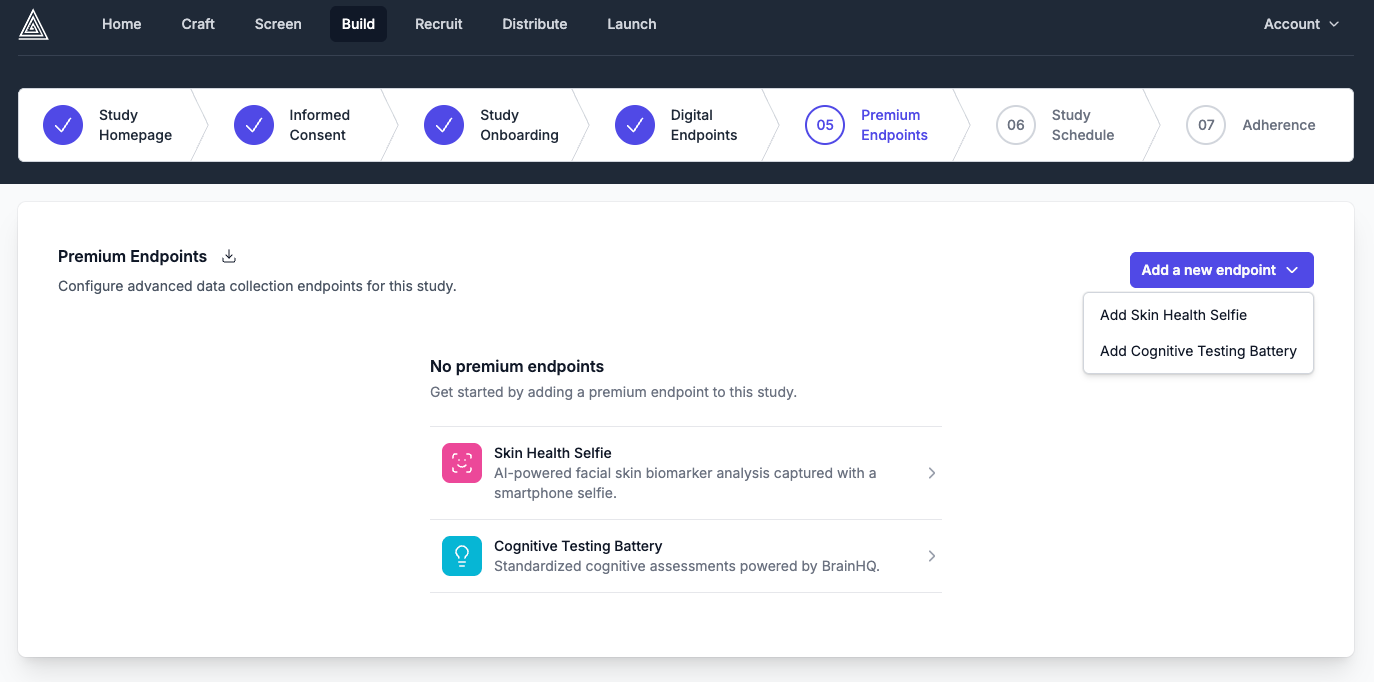
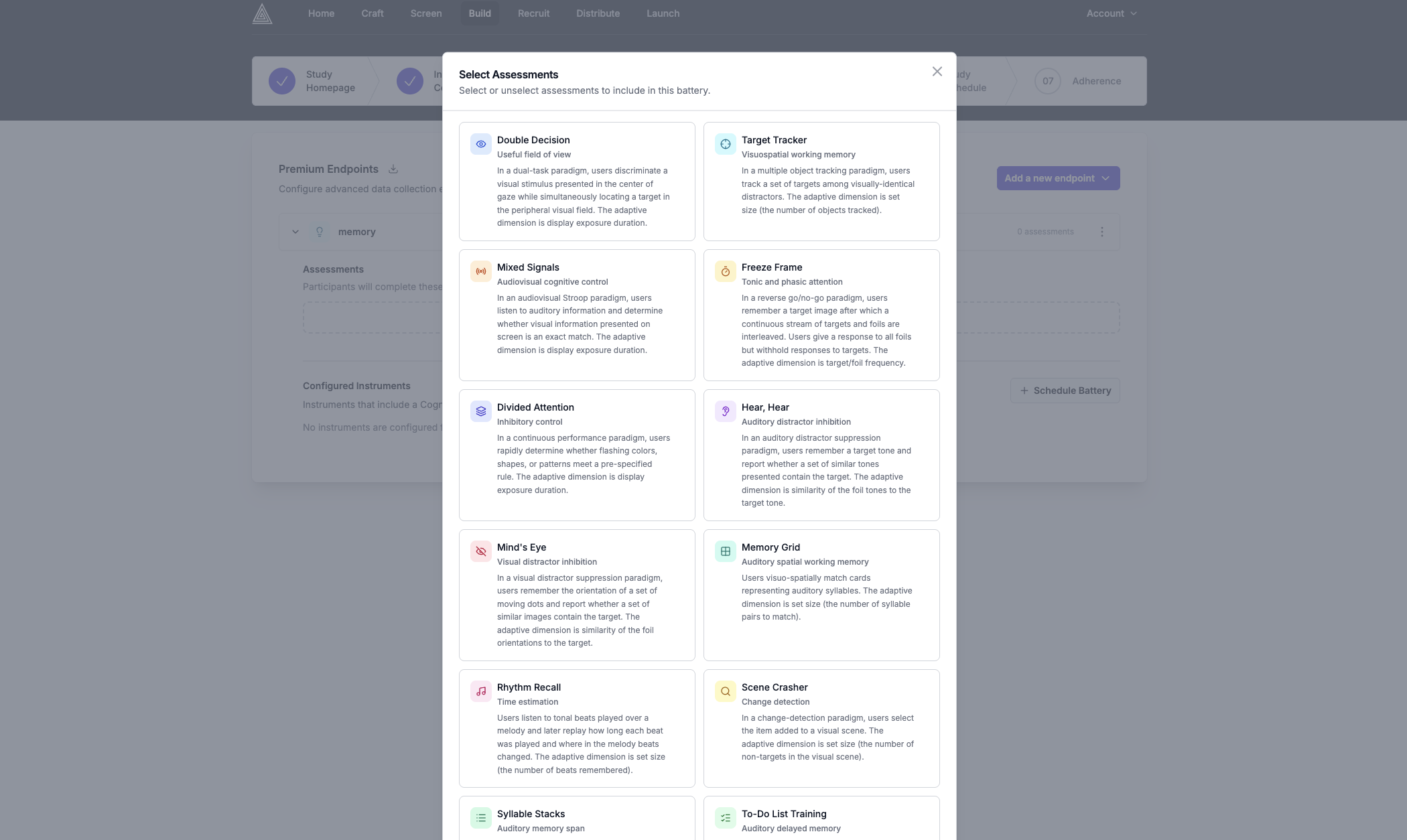
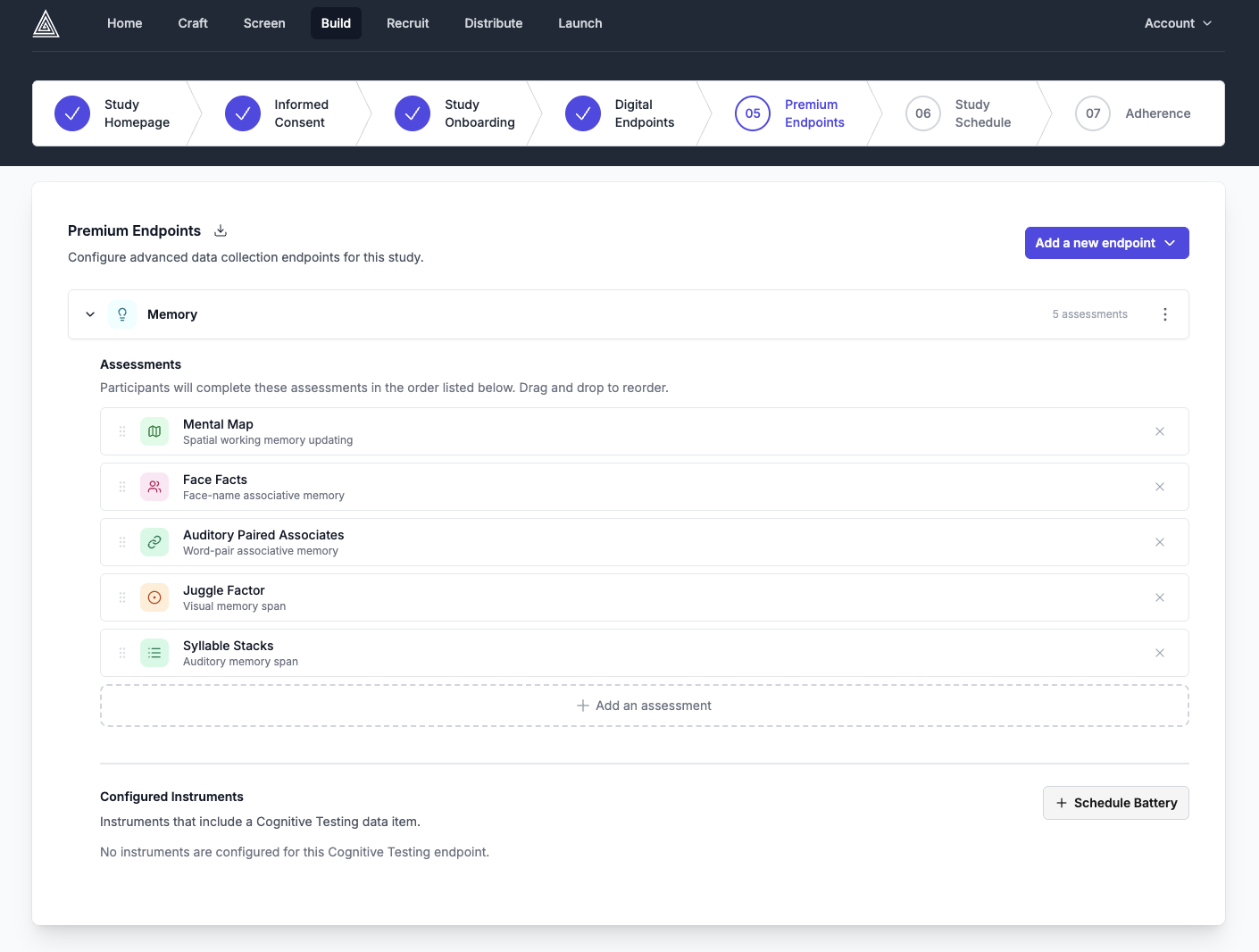
Here's how to add cognitive testing batteries to your study in Study Planner.
For studies that need to go beyond behavior and into brain activity itself, Alethios can integrate wireless EEG devices like Emotiv directly into a study's data collection. Emotiv's headsets range from lightweight, quick-setup options like the 5-channel Insight—which takes about a minute to put on and is built for use outside a lab (Emotiv EPOC X; Emotiv Insight).
Paired with a decentralized study design, that means EEG—historically one of the most site-bound measures in cognitive research—can now be collected from a participant's home.
Cognitive evaluation through Alethios is especially useful for supplement, functional foods, and nootropic research, longevity studies tracking cognitive trajectory over time, and any study where cognition might be a meaningful signal even when it isn't the primary endpoint.
To learn more about how Alethios supports cognitive health research, book a demo.
.png)
Whether you're a researcher or participant, Alethios makes health research frictionless and comprehensive.


.svg)